Introduction
For many travelers, the first glimpse of Bantayan Island is not a beach or a centuries-old church, but the busy yet welcoming docks of Santa Fe Port. Located in the municipality of Santa Fe, home to around 34,834 residents, the port serves as the island’s primary entry point. Almost every visitor passes through here, whether arriving by ferry from Cebu’s mainland or departing after a memorable stay.
The fun fact about Bantayan Island is that it is famous for its white-sand beaches and historic churches, but the journey begins with the very infrastructure that makes access possible. Santa Fe Port is more than a docking facility-it is the island’s front door, shaping first impressions and sustaining its tourism-driven economy.
The History and Role of Santa Fe Port
Santa Fe Port has long been a critical link between Bantayan Island and mainland Cebu. Before modern ferries, trade and movement relied on small boats and outriggers, making travel more difficult. With the rise of tourism in the 20th century, the development of the port became essential.
Today, it connects Bantayan Island with Hagnaya Port in San Remigio, Cebu, through regular ferry services. These crossings, lasting about 1.5 hours, bring in supplies, local residents, and the thousands of tourists who visit Bantayan each year. The port is not only a travel hub but also an economic lifeline, ensuring that goods and resources flow steadily between the island and the mainland.
First Impressions for Travelers
Arriving at Santa Fe Port is an experience in itself. From the ferry deck, visitors see turquoise waters, fishing boats, and the soft outline of white sand in the distance. As the boat docks, passengers are greeted by a mix of organized bustle and warm hospitality.
Porters assist with luggage, tricycle drivers call out for passengers, and locals sell snacks or souvenirs. For many visitors, this lively scene is their introduction to Bantayan’s character-practical, community-driven, and infused with island charm.
Santa Fe Port and Tourism
Santa Fe’s status as Bantayan’s tourism hub is reinforced by the port’s location. Most of the island’s resorts, particularly along Kota Beach and Sugar Beach, are just minutes away. Tricycles line up outside the port to ferry tourists directly to accommodations, with fares ranging from ₱20 to ₱50 for short rides and ₱100–₱150 for longer distances.
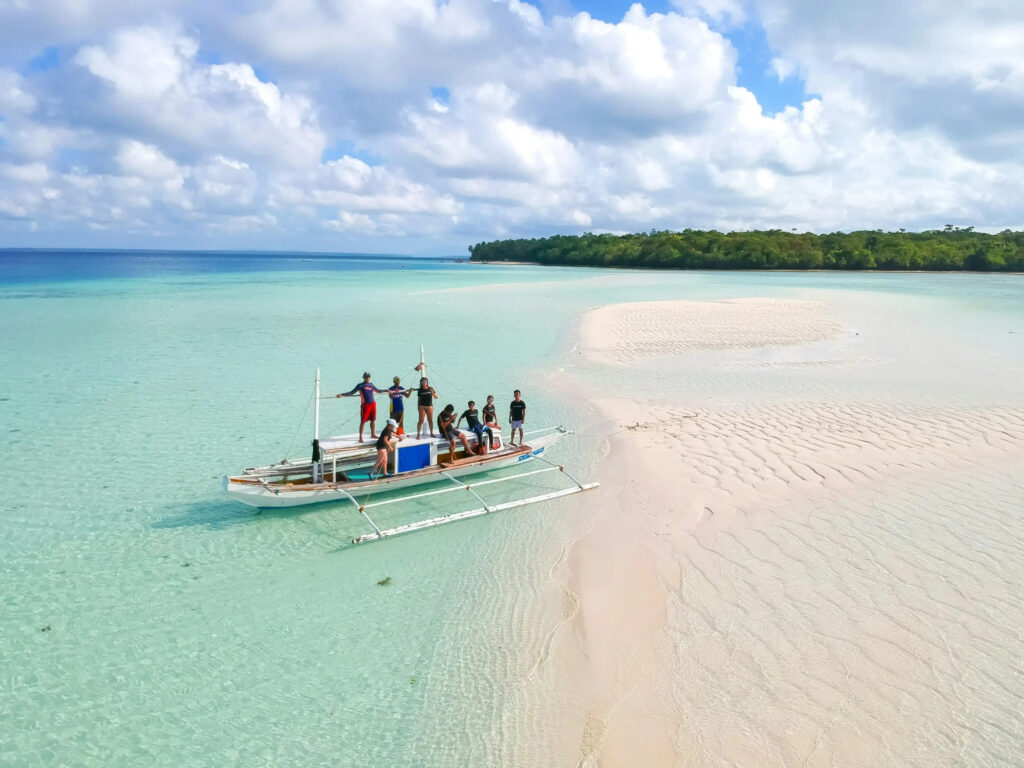
The port also serves as the base for many local tours. Island-hopping excursions, boat trips to nearby sandbars, and coastal explorations often begin here. By anchoring tourism activity in Santa Fe, the port supports countless livelihoods, from boat operators to market vendors.
Local Life Around the Port
The community around Santa Fe Port thrives on its daily flow of people. Small eateries serve local meals like grilled fish, dried danggit, and rice, catering to both travelers and workers. Vendors sell dried seafood, snacks, and souvenirs to passengers waiting for ferries.
The presence of the port also fosters cultural interaction. Tourists from across the Philippines and abroad mingle with locals, making the area a space where commerce and culture overlap. Unlike purely commercial ports, Santa Fe’s retains a village-like atmosphere, where the market, plaza, and beach are all within reach.
How to Get There & Around
Traveling to Santa Fe Port starts in Cebu City, where buses or vans from the North Bus Terminal head north to Hagnaya Port (₱200–₱250, 3–4 hours). From Hagnaya, ferries cross to Santa Fe Port (₱300–₱350, 1.5 hours). Schedules usually run every 1–2 hours during the day, though travelers should always check locally for updated times and ticket prices.
Once in Santa Fe, most resorts and attractions are within a 2–3 kilometer radius. Tricycles and motorcycle taxis are the main modes of transport, and motorbike rentals (₱300–₱500 per day) are available for those who want to explore the island more freely.
Best Time to Visit & Weather
The best time to pass through Santa Fe Port-and enjoy Bantayan Island-is during the dry season (December to May), when seas are calmer and ferry schedules are more reliable. Average temperatures range from 27°C to 32°C.
During the wet season (June to November), ferries still run, but trips can occasionally be delayed due to rough seas. Travelers should plan with flexibility and check weather updates before departure.
Responsible Travel Through the Port
With thousands of visitors passing through Santa Fe Port each year, sustainability is important:
- Dispose of waste properly before boarding or disembarking ferries.
- Support local tricycle drivers and vendors by paying fair prices.
- Respect the busy nature of the port by being mindful of workers handling goods.
- Travel light when possible, reducing the load on local transport systems.
By practicing responsible behavior, visitors contribute to keeping the port efficient and the community thriving.
Conclusion
Santa Fe Port is more than a gateway-it is the heartbeat of Bantayan Island’s tourism and trade. From the moment ferries dock, it connects visitors to the island’s serene beaches, historic churches, and vibrant culture. For travelers, it marks both the start and the end of their Bantayan journey. Exploring Santa Fe’s beaches and markets after stepping off the ferry ensures that the island’s first impression lingers as one of warmth, tradition, and simplicity.
Subscribe to our newsletter and get weekly updates on our blogs!